
blog post
when to be concerned about the flu
As a parent, it’s normal to be concerned when your child isn’t feeling well. Sicknesses can be scary, especially the flu, but knowing what to look for and what to do can help you feel more confident and prepared.
what is the flu?
The flu (short for influenza) is a sickness caused by a virus that spreads easily from person to person. It mostly affects the nose, throat and lungs. People usually get the flu in the winter, but it can happen any time of year. Flu season usually runs from October to May.
signs and symptoms of the flu
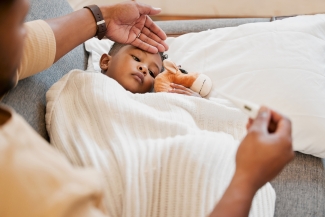
Flu symptoms can come on very quickly. Your child might:
- Have a fever or chills
- Feel very tired
- Cough or have a sore throat
- Have body aches or headaches
- Feel sick to their stomach or throw up
Not everyone will have all these symptoms, but if your child seems suddenly very sick, it could be the flu.
what causes the flu?
The flu is caused by a virus. It spreads very easily through tiny droplets when someone coughs or sneezes. Your child can also catch it by touching something with the virus on it and then touching their mouth, nose or eyes. Most people start feeling sick within a couple of days after coming in contact with the flu virus.
how to tell if it’s the flu or just a cold
While a cold and the flu may have similar symptoms, there are some differences:
- Flu: Symptoms come on quickly and typically include a high fever and body aches.
- Cold: Symptoms come on slower and are usually milder, typically starting with a stuffy nose.
If your child has a sudden fever and feels very tired, it’s more likely that it’s the flu.
how to treat the flu at home
Most children with the flu can get better at home. Here’s what can help:
- Lots of rest! Let your child sleep and relax.
- Lots of water! Keeping your child hydrated is important. Give them water or clear liquids.
- Tylenol and/or Motrin for fever relief and body aches. Using acetaminophen (Tylenol) or ibuprofen (Motrin) if needed. Always follow the label or ask your child’s pediatrician.
- Stay home until your child’s fever has been gone for at least 24 hours without using fever-reducing medicine like Tylenol or Ibuprofen.
how to prevent the flu
While there is no way to prevent the flu altogether, the best way to protect your child from the flu is with the flu shot! The flu shot is safe and effective and can help prevent serious illness if your child does get infected. Click here to see where you can get your flu shot with Dayton Children’s. Other ways you can prevent the flu include:
- Washing hands often with soap and water
- Covering coughs and sneezes
- Cleaning surfaces like phones and doorknobs often
- Avoiding contact with sick people if possible
when to seek medical attention for the flu
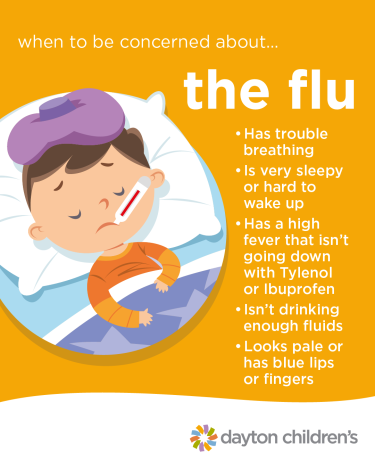
While most children can recover at home with lots of rest and water, some children may experience more severe symptoms. Call your child’s pediatrician right away or go to urgent care if your child:
- Has trouble breathing
- Is very sleepy or hard to wake up
- Has a high fever that isn’t going down with Tylenol or Ibuprofen
- Isn’t drinking enough fluids
- Looks pale or has blue lips or fingers
Trust your instincts, if something doesn’t feel right, it’s okay to ask for help. You can also use our symptom checker to help you choose where to go for care.
can’t get in to your pediatrician? save your spot with Kids Express
Kids Express is here for minor injuries and illnesses like the flu! Save your spot online at one of our convenient locations.

