radiology
Dayton Children’s pediatric radiology team provides safe, low-dose imaging using the latest technology and a gentle, child-centered approach.

expert imaging for every child
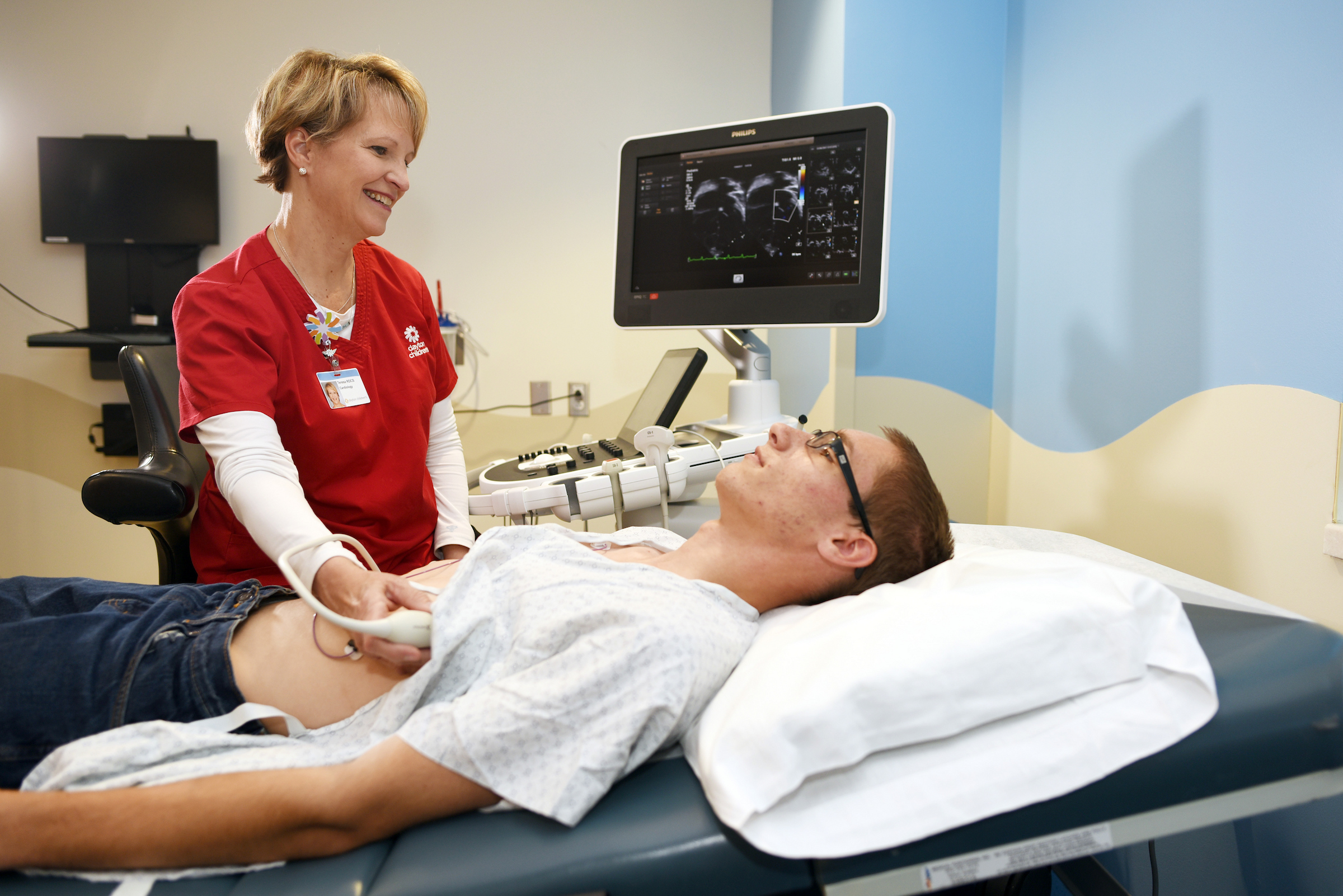
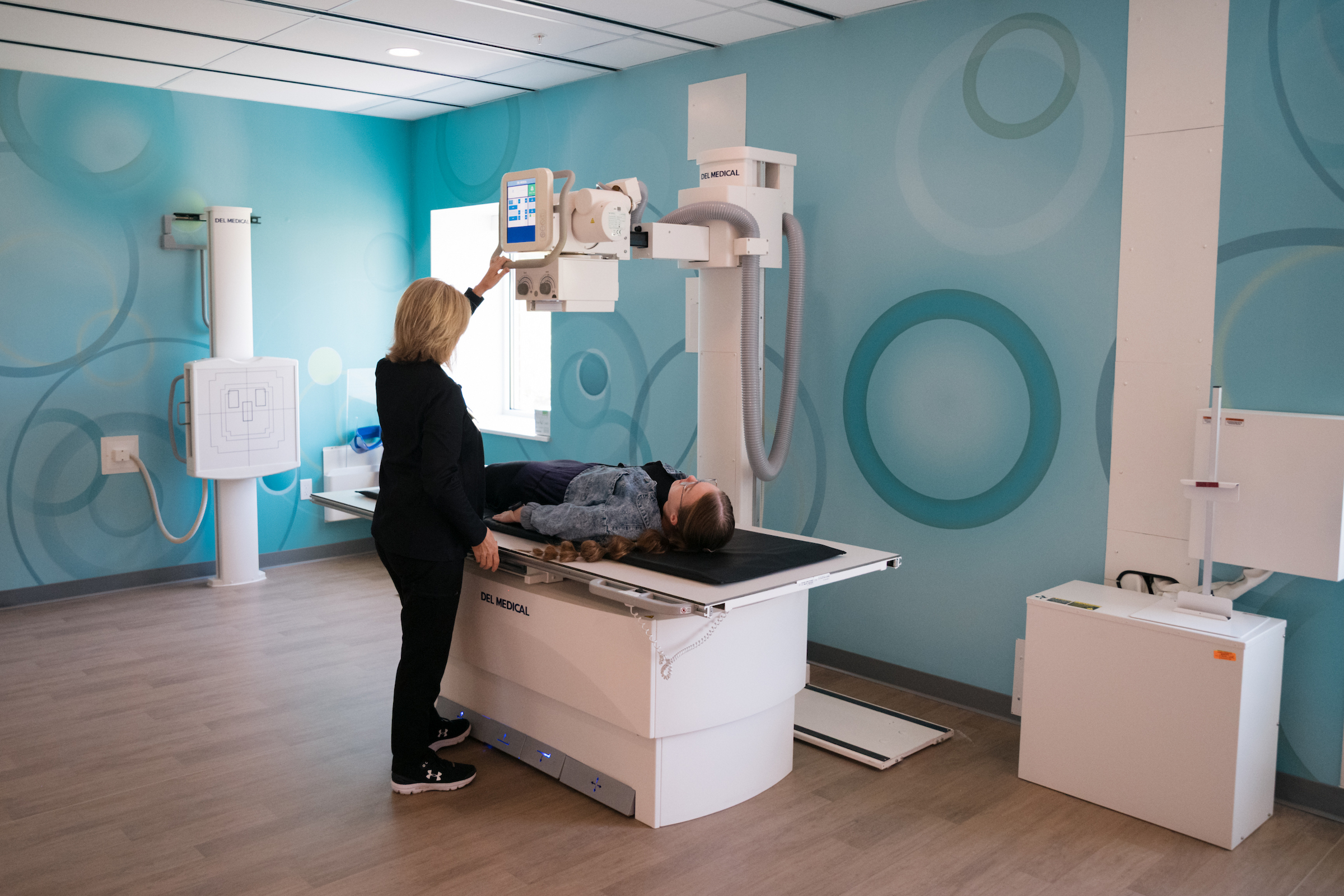
The radiology team at Dayton Children’s offers a full spectrum of diagnostic imaging designed just for kids. Our pediatric radiologists, technologists and nurses specialize in caring for infants, children, teens and young adults — ensuring every exam is safe, accurate and as stress-free as possible.
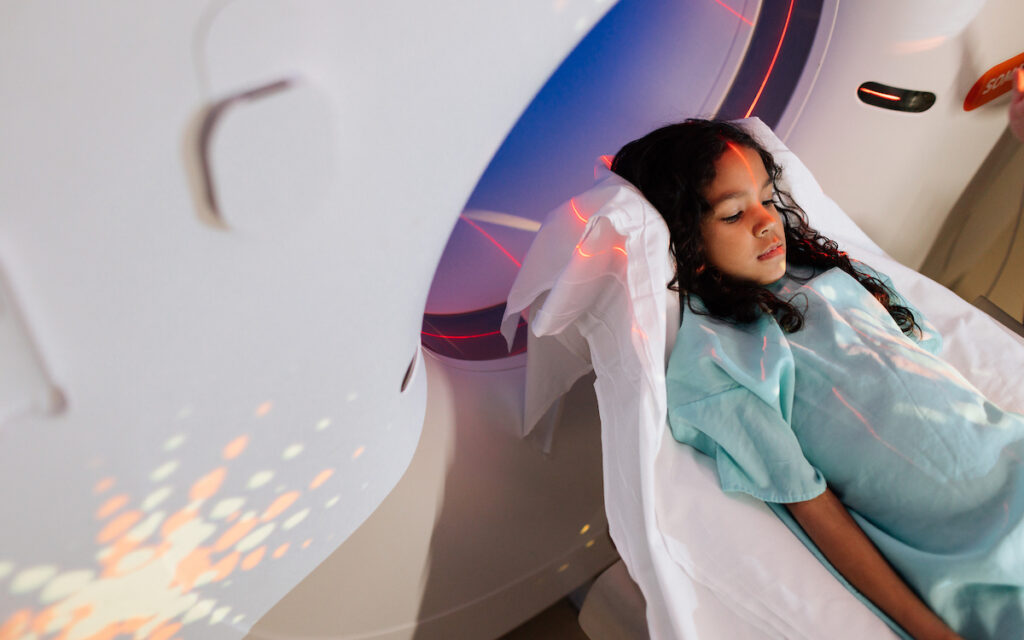
Our advanced equipment provides high-quality images while minimizing radiation exposure. MRI is available at both our main and south campus locations, featuring child-friendly options such as video goggles and quieter scans. Parents are welcome to stay with their child during many exams, and children can bring their own movie for comfort.
At our south campus, MRI exams are performed using the widest and quietest bore available, helping patients who experience anxiety or claustrophobia feel more at ease.
the pediatric difference
In medical imaging, one size does not fit all. Dayton Children’s is a strong advocate for safe and low-dose imaging for children. When possible, we use non-radiation imaging tools such as ultrasound or MRI to assess your child’s condition. We also created the Soaring Towards Anxiety Reduction (STAR) program to give patients the option to try their MRI scan without the use of sedation, when possible.
Our team includes pediatric sedation specialists for patients who need assistance staying still during exams, and child life specialists trained in distraction techniques to make imaging experiences more positive.
Our Image Gently pledge
We are strong advocates for safe and low-dose imaging. To ensure safe imaging of our patients, Dayton Children’s:
- Requires all radiologists to be board-certified in pediatrics
Uses child-size radiation doses and follows American College of Radiology’s “Image Gently” guidelines - Works together with a child’s physician to ensure the correct procedure to minimize radiation. We may suggest an alternate way to image the child first without radiation if possible.
- Scans only the indicated area
- Reviews each order before scanning and assigning a specific protocol for the scan
- Uses shielding when it does not interfere with the area that we are imaging
- Routinely reviews our CT dose techniques to be sure we are using the smallest amount of radiation possible
meet our radiology team
Our radiology team brings expertise and compassion to every child’s care. Find a provider today.
conditions we treat
Dayton Children’s treats radiology conditions, including:
imaging and radiology services available
Dayton Children’s offers a full spectrum of diagnostic imaging for pediatric patients, using state-of-the-art equipment designed to perform diagnostic examinations with minimum radiation exposure to patients. The pediatric radiologists are assisted by technologists and staff trained in working with infants, children, teenagers and young adults.
- Fetal imaging
- CT
- MRI ( 3T, 1.5T)
- Ultrasound
- DXA
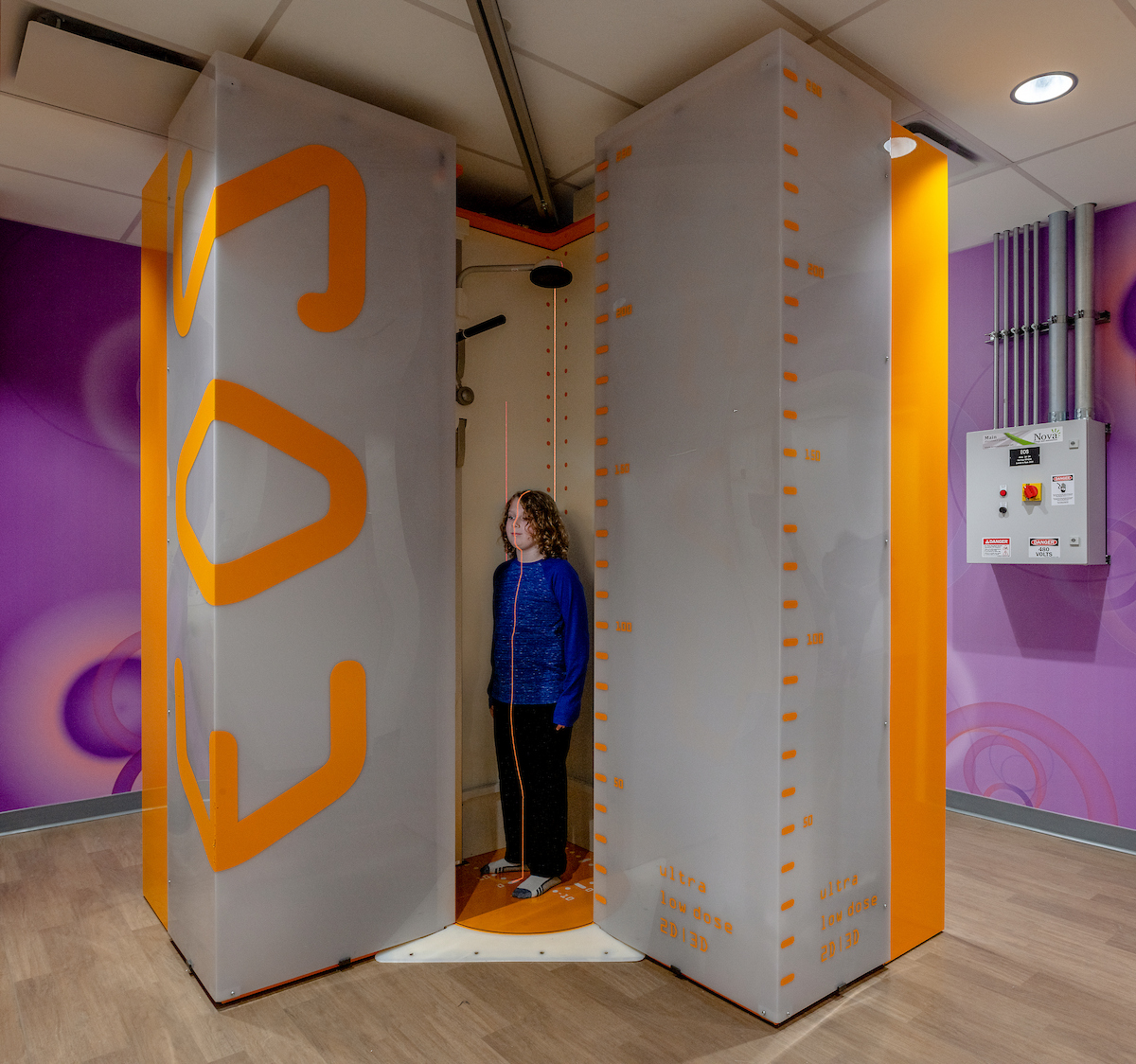
- EOS biplane ultra-low-dose imaging
- Diagnostic radiology procedures: Voiding cystourethrogram (VCUG), Upper gastrointestinal series (UGI), Small bowel series (SBFT), Esophagram/barium swallow, Barium swallow with a speech therapist, Intravenous urogram (IVU/IVP), Barium enema, Therapeutic air enema for intussusceptions
- Interventional Procedures: Botox for salivary glands, Lumbar punctures, Arthrograms, PICC line insertions, Percutaneous biopsies, Percutaneous abscess drains, Percutaneous chest tubes, Sclerotherapy, Myelogram, Angiograms
- Nuclear medicine procedures
All studies, including those from off-site locations, are sent to PACS (Picture Archiving and Communication System) to be stored, distributed and viewed electronically.
radiology programs and clinics
The upper airway program at Dayton Children’s provides a multidisciplinary approach to the diagnosis and management of children with complex obstructive sleep apnea (OSA). OSA in specific populations of children, such as those listed below, often do not respond completely to conventional treatment. In these children, OSA can arise from the collapse at multiple sites in the upper airway. The identification and treatment of these sites of upper airway obstruction requires a multi-disciplinary approach. Specialists from sleep medicine, otolaryngology, radiology, and plastic surgery collaborate to provide comprehensive care for each child. An individualized care plan is developed through weekly virtual meetings and monthly meetings where advanced imaging is reviewed.
Conditions treated include craniofacial anomalies, Down syndrome and persistent obstructive sleep apnea (after tonsillectomy).
Undergoing an MRI can sometimes be something that can make kids anxious. To help kids that are anxious about their MRI, or simply worried that they will have a hard time staying still, sometimes sedation is required. At Dayton Children’s we try to avoid using sedation as having sedation always comes with risks.
To help our patients complete their MRI without the need for sedation, our medical imaging and child life departments collaborated to create the STAR program. This program gives patients the option to try their MRI scan without the use of sedation, when possible, to help reduce the risks of having sedation.
This program is geared to patients that are developmentally 4 years of age and older.
soaring towards anxiety reduction (STAR) program
Undergoing an MRI can sometimes be something that can make kids anxious. To help kids that are anxious about their MRI, or simply worried that they will have a hard time staying still, sometimes sedation is required. At Dayton Children’s we try to avoid using sedation as having sedation always comes with risks.
To help our patients complete their MRI without the need for sedation, our radiology and child life departments collaborated to create the STAR program. This program gives patients the option to try their MRI scan without the use of sedation, when possible, to help reduce the risks of having sedation. It is geared to patients that are developmentally 4 years of age and older.
When your child’s doctor refers your child for an MRI with sedation our medical imaging staff will then review the information in your child’s chart to assess if they would be a candidate for the STAR program. If your child is a candidate then someone from our team, typically a child life specialist, will reach out to explain how our STAR program works and how we can support your child. Child life specialists are members of our healthcare team that help to prepare patients for what they can expect to have happen when they come to the hospital in ways that are developmentally appropriate for your child. You will then speak to someone from our scheduling team to schedule your child for a non-sedated MRI appointment and a sedated MRI appointment.
Typically a child life specialist will be present the day of your child’s non-sedated MRI appointment to review this information with your child and answer any questions that they may have. They will make sure your child is prepared to try their MRI without sedation and will be present with your child when they are placed into position for their MRI and when they begin their MRI.
If your child successfully completes the non-sedated MRI, the sedation appointment will be canceled. If your child was unable to complete the non-sedation MRI, you will not be charged, and your child will need to move forward with the scheduled sedation appointment.
- Saves time! An MRI with sedation can take up to 2 to 2 ½ hours. With the STAR program, a non-sedated MRI only takes about an hour.
- Reduces risks related to anesthesia and side effects (nausea/vomiting, fatigue, irritability/fussiness, blood pressure instability, respiratory issues)
- Happier patients. Patients and families are exceptionally pleased with the process and outcome
- Quicker access. Your child’s non-sedated MRI appointment will be before their sedated MRI appointment, which means their MRI will be done sooner if they can complete it without sedation.
- Watch a movie. When doing an MRI without sedation, your child will get to use our special MRI movie goggles to watch a movie during their MRI.
- Stay with your child. If you would like to stay with your child, you will fill out a screening form that the MRI staff will review to make sure that you meet the criteria to go with your child to their MRI.
It is normal for kids to be anxious about something that they have not done before, especially when it involves coming to the hospital. We have found that when kids are provided information ahead of time of what will happen, we answer any questions they have, review the information to assess their understanding and provide them with reassurance every step of the way that most of our patients are able to complete their MRI without the need for sedation.
Before and during your child’s MRI every member of the medical imaging care team will work together to provide an exceptional experience tailored to fit your child’s needs which will help them to complete their MRI without the need for sedation.
news and blogs
Stay up-to-date with the latest insights from Dayton Children’s Hospital. We’re always working to share helpful, real-world content for families navigating pediatric care.
patient stories
Real families, real results. Whether it’s a soccer player getting back on the field after an ACL tear or a toddler taking their first steps after clubfoot treatment, our patients and families inspire us every day. These stories offer hope, guidance and reassurance that we are here for your child every step of the way.
Explore how Dayton Children’s has gone above and beyond for kids just like yours.
for your visit
A physician referral is required for all imaging. Walk-in visits are available for X-ray orders; for all other medical imaging, an appointment is required.
For all visits, please bring:
- Your insurance information
- Your physician’s order (if you have a hard copy)
- Your driver’s license
- Any required forms from your school, state or outside agency
find more resources for your visit
Get checklists, resources, and helpful tips for before, during, and after your visit to Dayton Children’s—so you know exactly what to expect.
what to expect during an MRI
This short video will walk you and your child through what it’s like to have an MRI at Dayton Children’s. We will ask your child to change into a gown before their MRI. Metallic items in clothing can be a risk for severe burns. It can be hard to tell which clothes may be a risk, so for your child’s safety, we ask all patients to change into a gown.
preparing for a cardiac MRI
To better prepare you and your child for what will happen during a cardiac MRI at Dayton Children’s, view the resources below. For any questions, please contact the child life department for imaging support at ambulatorychildlife@childrensdayton.org or 937-641-3303
We hear you are going to have an MRI with us! We want to give you information about what will happen the day you come in for your MRI.
Since you are having an MRI of your heart, there will be a few pictures when you will need to hold your breath. The heart is in the chest and moves when you breathe. So, it’s important to not only hold your body still, but to also sometimes hold your breath to keep your lungs and heart still.
The longest you’ll need to hold your breath is for about 15 seconds. We’ll need you to:
- Take a deep breath in, blow it out, then hold it at the bottom
- For some images, we may ask you to hold your breath when you breathe in. This means you will take a deep breath in and hold it; like you’re jumping in a swimming pool. We’ll give you time to catch your breath in between these pictures.
We hope this information helps you understand what will happen when you come for your MRI.
We look forward to meeting you!
We hope this information will help prepare you and your child for their appointment.
what to wear and what not to wear
The MRI scanner is a magnet; therefore, no metal will be allowed in the scan room. Please have your child remove any makeup, lotion, nail polish, fake tattoos, jewelry, and hair accessories they have before their appointment. We will give your child a hospital gown to change into for their MRI. They can keep on their underwear and socks as long as they do not contain any glitter, sequins, metal, etc. They will need to take off all other clothing.
breath holds
As your child is having a cardiac MRI, they will be asked to complete a series of breaths holds.
- One type of breath hold will be at the end of breathing in (take a deep breath in, blow all of your breath out and hold it at the bottom).
- The second type of breath hold will be on breathing in (taking a deep breath in and holding it).
They may need to hold their breath for up to 15 seconds at a time. They have time to catch their breath in between breath-holds. You can practice with your child at home by having them lay still, take a big breath in, blow it all the way out, and hold it for however many seconds they can. Work up to 15 seconds.
Once positioned on the scanner, the MRI tech will place electrocardiogram leads on your child’s chest and a belt below the chest. These collect information about your heartbeat and breathing throughout the test.
distraction during the MRI
To help with distraction during your child’s MRI, we offer video goggles and have a large selection of movies for your child to choose from. They may also bring their favorite movie from home to watch during their scan. We will send you the movie list, so your child can look over our movie selections before their MRI. Your child may also bring any comfort item (blanket, stuffed animal, etc.) that does not contain metal, glitter, sequins, etc. The comfort item cannot play sounds, as the sound device could contain metal.
tips to discuss the MRI with your child
- You can watch this short video about what to expect during an MRI. Please note that the patient in this video is having an MRI of the brain. If your child is not having an MRI of the brain, let them know that they will not be wearing the “astronaut helmet.” They also may be positioned differently on the bed depending on their type of MRI. If you or your child have questions on how they will be positioned, please contact our child life team.
- Make sure that they understand the MRI camera will not touch them and that it will not hurt them.
- Help them to understand that their most important job is to remain very still.
- Have them practice lying still at home by playing statue. Use a timer to make a game out of seeing how long they can remain still. Start out with your child remaining still for 1 minute. Increase time by 1 minute for each try until you have reached 5 minutes. Once your child has mastered remaining still, have them practice this while under a table or chair with a sheet draped over the table or chair. If you have headphones, have them wear headphones while listening to music as they are remaining still under the table or chair. Have your child listen to the sounds an MRI makes by clicking this link. Play the sounds starting at low volumes so they can get used to the sound.
There are many questions about an MRI, especially for your first time. Find all teh answers to you and your child’s questions.
general imaging and radiology FAQs
Like any medical test, the beneficial information gained from the test should outweigh the risk of having the test performed. CT is a very powerful and valuable imaging technique that can provide important and even lifesaving information. Sometimes, however, imaging tests like ultrasound and magnetic resonance imaging (MRI) may provide the same information as CT but not expose your child to any radiation. You should ask your doctor and imaging provider whether these alternatives are appropriate for your child’s situation. If a CT is the best test, make sure that your imaging provider uses appropriate low-dose techniques to minimize radiation exposure during the test.
Some facilities that perform CT scans on adults do not use radiation dose reduction techniques when scanning children. You won’t know unless you ask, and it is reasonable and within your rights to do so. Your imaging provider should be able to provide you with information about what they do to reduce radiation doses during CT. Other things to ask about include whether the facility has American College of Radiology accreditation, whether the CT technologists are credentialed and if the person interpreting the studies is a board certified radiologist or pediatric radiologist.
While no one can point to a single individual and say that their cancer was caused by medical radiation, there is evidence that exposures to radiation levels found during CT scans may slightly increase the risk of future cancer. The risk for developing cancer is debated and variable, and may be zero, but estimates also range from about one in 500 to one in 10,000 fatal cancers from a single CT scan. This needs to be interpreted against the risk of developing cancer over one’s lifetime. Since the risk of developing cancer in an individual is about one in five during a lifetime, the extra risk from CT is very small.
Any discussion should start with your child’s physician. They will know or can inquire if the imaging center to which they refer utilizes appropriate pediatric CT scanning techniques and if a non-radiation imaging test might be as useful for your child’s situation. If not, you should ask to speak with the technologist or radiologist at your imaging facility so that your concerns and questions can be answered.
FAQs about an MRI
This short video will walk you and your child through what it’s like to have an MRI at Dayton Children’s. We will ask your child to change into a gown before their MRI. Metallic items in clothing can be a risk for severe burns. It can be hard to tell which clothes may be a risk, so for your child’s safety, we ask all patients to change into a gown.
Magnetic resonance imaging (MRI) is a safe and painless test that uses a magnetic field and radio waves to produce detailed images of your body. During the exam, radio waves change the magnetic position of the atoms of your body. These are picked up by a powerful antenna and sent to a computer. The computer performs millions of calculations, which produce black and white images of the body. These images can be converted into three-dimensional (3-D) pictures of the scanned area.
An MRI scanner is a large doughnut-shaped magnet that has a tunnel in the center. You will be placed on a table that slides into the tunnel. You will lie on the movable scanning table while the technologist places you into position. You will have video goggles placed over your eyes to watch a movie of your choice. Headphones will also be placed over your ears so that you can hear your movie and to help drown out some of the noise from the MRI. The table will slide into the tunnel, and the technologist will take images of your body.
During your MRI, you will hear sounds coming from the camera. You don’t need to be scared. These sounds just mean that the camera is taking your picture. In between your pictures, the technician will pause your movie to check with you to make sure you are ok. When the technologist talks to you, please answer in a loud and clear voice.
Two important things to remember:
- The only time you can talk is when the technologist pauses your movie and talks to you first.
- You have to stay very still during the MRI. This means that we do not want you to move at all. Once the exam is over, the technologist will slide the table out from the tunnel and help you get up.
When you get to the hospital, we will have you change into our hospital gown top and bottom. You can leave your underwear and socks on as long as they don’t have any glitter, sparkles, sequins, or anything metal on them.
Yes, you can bring a stuffed animal or blanket with you, but, just like your underwear and socks, they can’t have any glitter, sparkles, sequins, or anything metal on them. They also can’t play any sounds, because those parts may have metal in them.
Staying very still is your most important job when you are getting an MRI. Our MRI takes pictures like a camera you may have at home. When you are taking a picture at home and you move, then you have to take the picture again, because it is blurry. Our MRI camera is the same way; if you move, we will need to take the pictures again. We want you to get done as quickly as you can, so that you can be finished with your MRI. This is why it is so important to stay very still!
Yes! You will have video goggles placed over your eyes to watch a movie of your choice. The video goggles are super cool! On the outside, the goggles look like virtual reality goggles, and on the inside, the movie looks like you are in a movie theater! Headphones will be placed over your ears so that you can hear your movie and to help drown out some of the noise from the MRI.
hours & locations – medical imaging/radiology
Imaging services are available at multiple convenient locations across the region. A physician referral is required for all imaging. Walk-in visits are available for X-ray orders; for all other medical imaging, an appointment is required.
making imaging easier for kids
Our pediatric radiology team is here to ensure your child’s experience is safe, comfortable and accurate. For imaging and radiology questions call 937-641-3000.