newborn intensive care (NICU)
Dayton Children’s NICU delivers advanced and compassionate family-centered care for premature and critically ill newborns.
the dayton children’s difference
Dayton Children’s newborn intensive care units (NICUs) are trusted to care for more than 1,300 babies yearly. With locations at Dayton Children’s main campus and Kettering Health main campus, totaling 52 private rooms, we care for the region’s sickest babies, many born weeks early and some weighing less than one pound.
family-centered care
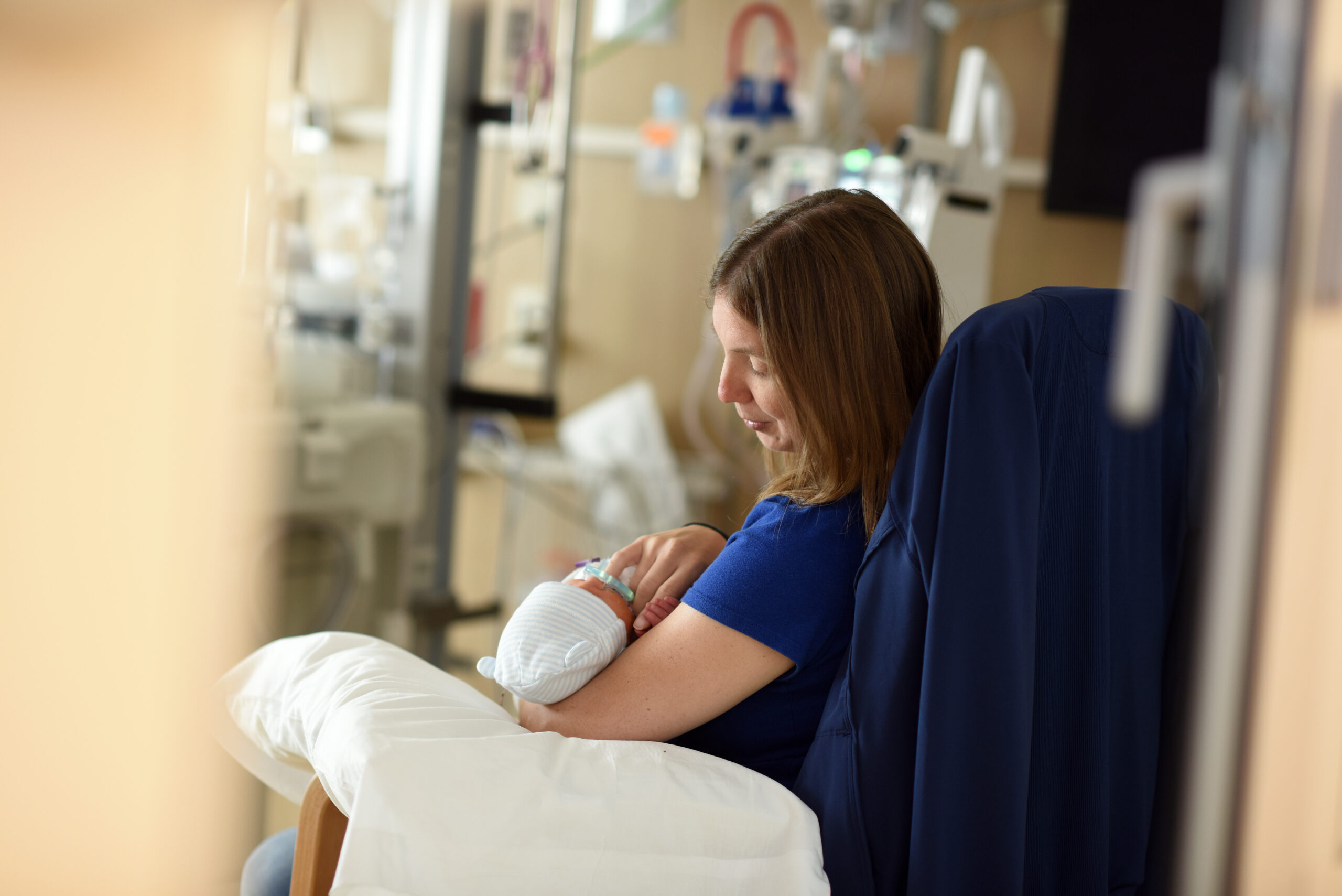
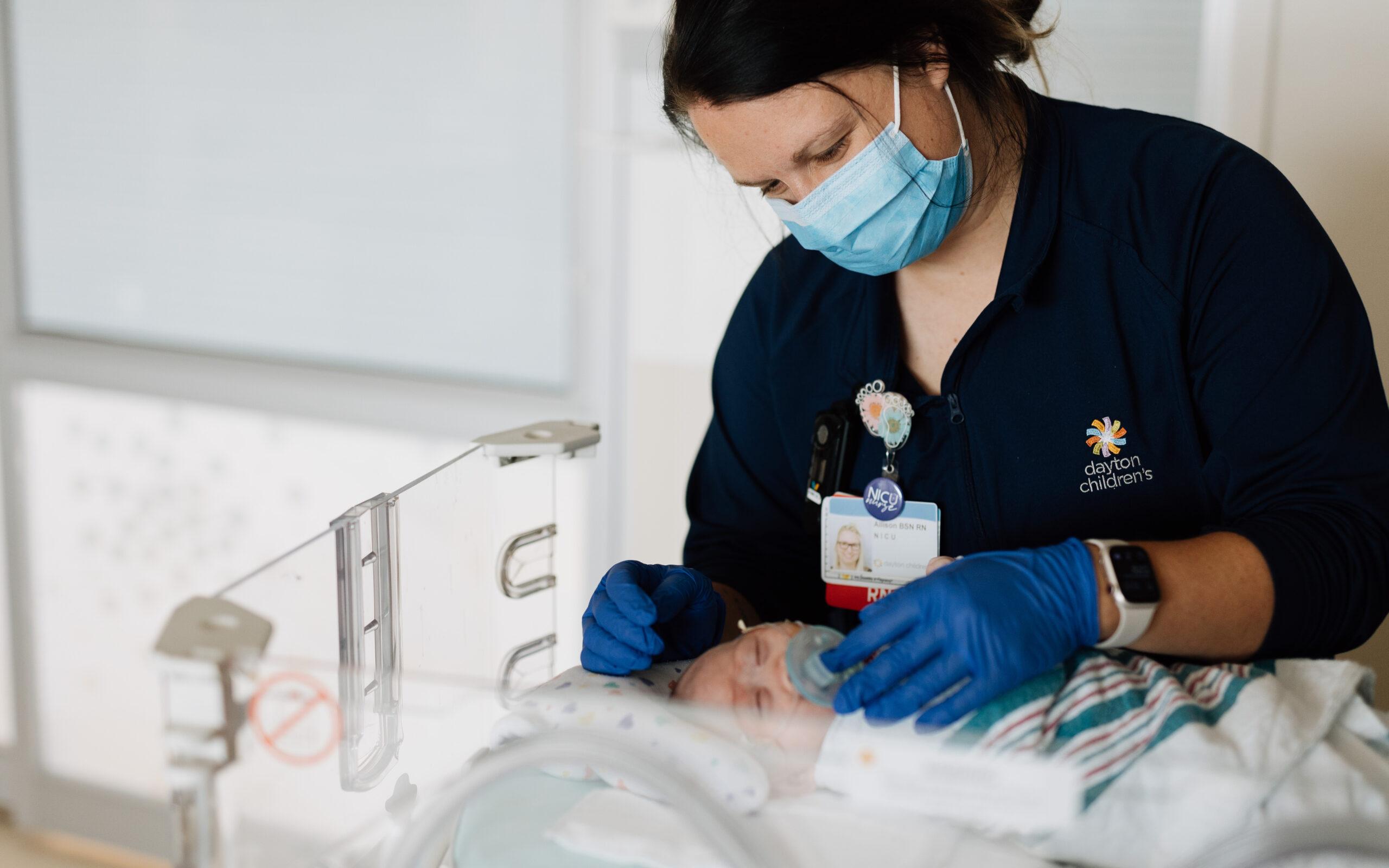
We are passionate about providing family-centered care in a child-friendly, healing setting. Our family-centered care ensures that you will be a partner in your infant’s care and treatment. Your family is an important part of our team. We believe families are powerful partners in health care and vital to the healing process of critically-ill newborns.
expert team, trusted care
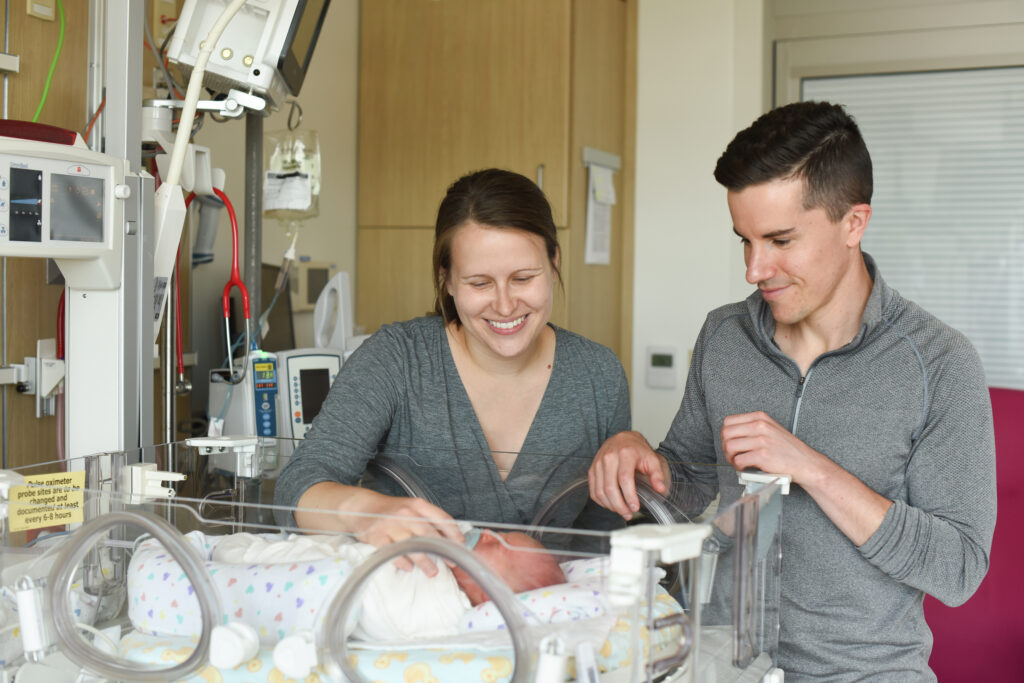
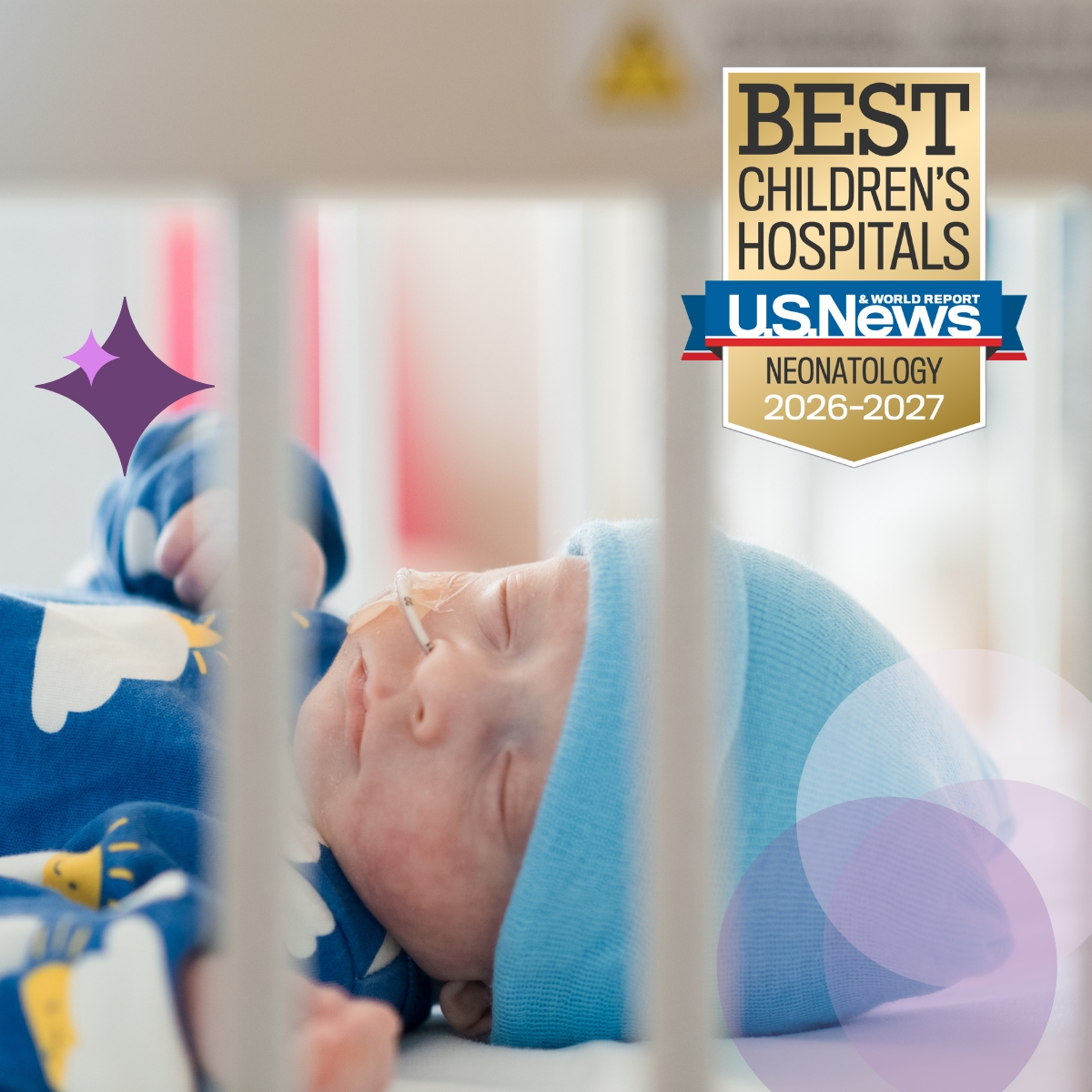
With decades of experience, advanced training, and a shared dedication to compassion, our U.S News & World Report-ranked NICU team is committed to giving each baby the safest start and every family the reassurance of knowing they’re not alone.
Our neonatologists are specially trained to care for premature and critically ill newborns, and they partner with nurses, respiratory therapists, and specialists from more than 50 areas of pediatric medicine.
This teamwork means every baby receives individualized care, from advanced procedures to daily support that helps them grow stronger. Families are always part of the process, because we know parents and caregivers are essential members of the care team.
advanced technology
From monitoring systems to specialized equipment, our NICUs use state-of-the-art technology to support healing and growth, including:
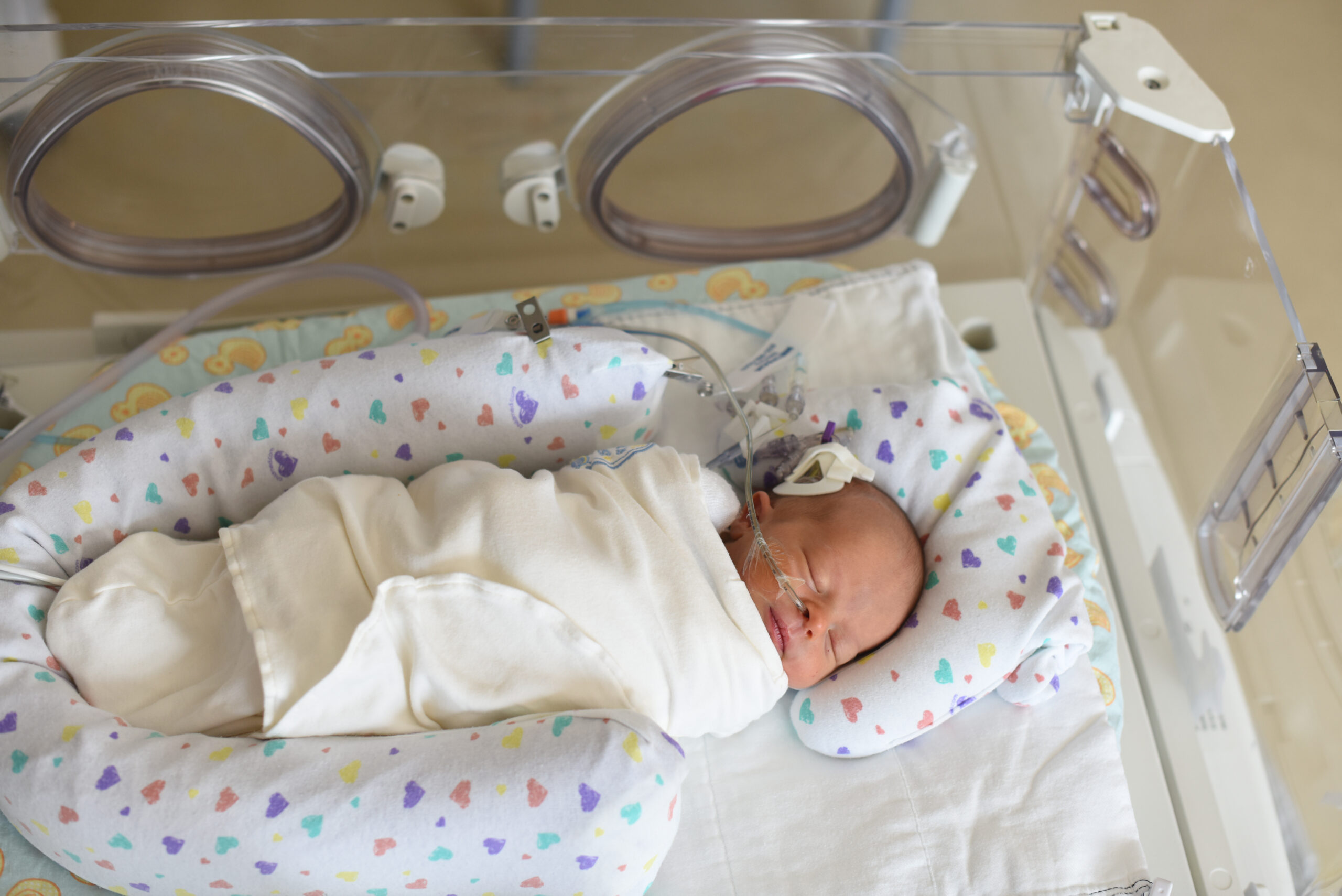
- Giraffe® OmniBeds – soothing, womb-like beds that promote development
- AngelEye cameras – secure video access so families can see their baby anytime, anywhere (available in some locations)
- Advanced monitoring systems – continuous tracking of vital signs for safety
- GetWell – an in-room system with education and entertainment for families (available at some locations)
our newborn intensive care specialists
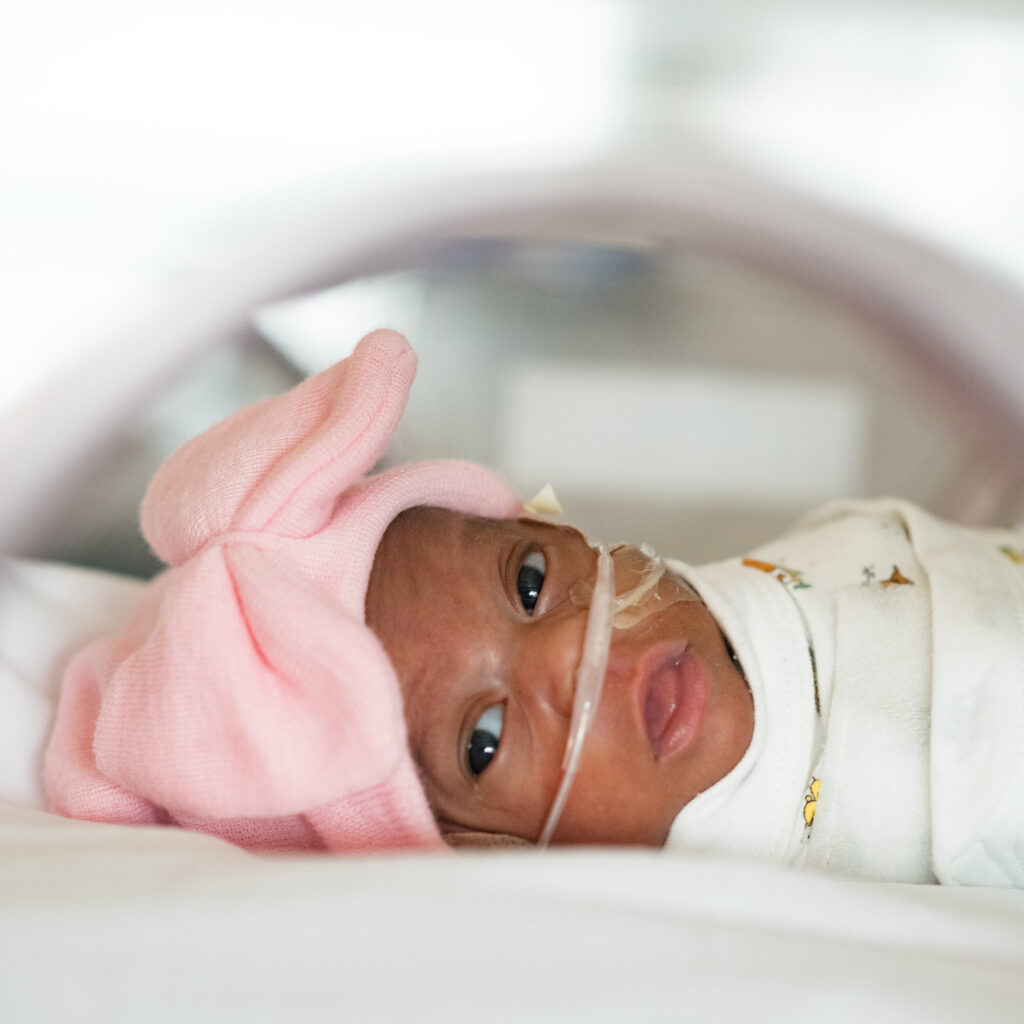
Our NICU is led by board-certified neonatologists and supported neonatal nurse practitioners and specially-trained nurses. They are also supported by a multidisciplinary team of specialists from more than 50 areas of pediatric medicine. Together with nurses, respiratory therapists, dietitians, lactation consultants, therapists, social workers, pharmacists, chaplains, and more, we coordinate care that meets each baby’s unique needs — with the shared goal of getting them home safely.
conditions we treat
The NICU at Dayton Children’s provides expert care for premature and medically fragile newborns, as well as babies with rare or complex conditions that require surgery or other specialty support. We are the only NICU in the region equipped to perform surgery on these infants, ensuring advanced care close to home.
In rare cases, babies may need a type of care not available at Dayton Children’s, such as open-heart surgery. When this happens, our team works closely with families to coordinate a safe transfer to the right hospital and then provides comprehensive follow-up care once the baby returns.
programs & clinics
Outside of the care provided to infants in our newborn intensive care unit, our team also partners with or provides the following programs and services:
Specialists at Dayton Children’s work closely with physicians throughout our community to provide the best possible care for babies during pregnancy and in the early stages of life.
Our expertise and experience, along with input from a referring physician, will guide the creation of an individualized care plan based on the needs of each family. This unique plan may include diagnostic tests such as ultrasound, fetal MRI and genetic testing, innovative procedures and interventions, and specialized care after birth.
Dayton Children’s provides ground transportation for critically ill and injured children who need to be transferred to or from the hospital and another facility. Our fully equipped transport vehicles serve as medical intensive care units, and are staffed by highly trained, experienced nurses and respiratory therapists.
Patients who are transported from other hospitals to Dayton Children’s may include:
- Newborns who need to be transferred to the Dayton Children’s newborn intensive care unit
- Patients who need a higher level of care than another hospital is able to provide
- Children who were hospitalized at a distant facility and want to receive care closer to home
- In some rare situations, patients are transferred from Dayton Children’s to another facility for care. One example is when an organ becomes available for a child who has been awaiting a transplant.
Our average dispatch to departure time is 15 minutes, and our team has easy highway access from all points in the region. Dayton Children’s can also make arrangements for air transportation when patients need to travel to or from a distant hospital.
We believe breast milk gives our NICU babies the healthiest start. While we encourage and support mothers to provide their own milk whenever possible, some may not produce enough or be able to pump.
To ensure every baby has access to this vital resource, we partner with the Mothers’ Milk Bank of Ohio. All babies born weighing less than 3 pounds, 5 ounces may receive donated breast milk, with guidance and support from our lactation consultants. When breast milk isn’t an option, our team will discuss safe alternatives such as formula and fortifiers.
We are deeply grateful to the mothers who donate milk to help our tiniest patients thrive. If you’re interested in becoming a donor, connect with the OhioHealth Mothers’ Milk Bank by visiting their website or calling 614-566-0630
Our clinical nutrition lab helps ensure every baby in the NICU receives the exact nutrition they need to grow and thrive. Staffed by specially trained technicians, the lab prepares and tracks breast milk and formulas — from adding calories to breast milk for extra growth support to providing specialized formulas when needed.
Technicians visit your baby’s room 1–2 times each day to collect milk, which is then scanned into our barcode system. This system records important details like time, date, and expiration, and tracks your baby’s milk until it’s ready to be fed. At feeding time, the barcode is scanned again to confirm the right milk, fortification, and timing — adding an extra layer of safety and peace of mind.
For families with extra stored milk, the lab also provides secure freezer storage to extend its use.
Babies who begin life in the NICU often need specialized follow-up care to ensure they continue to grow and develop as expected. Our high-risk newborn follow-up clinic provides screenings, evaluations, therapies, and referrals, along with education and support for parents. A team of developmental specialists, physicians, nurses and therapists work together to give your baby the best start beyond the NICU.
news and blogs
Stay up-to-date with the latest insights from Dayton Children’s Hospital. We’re always working to share helpful, real-world content for families navigating newborn intensive care.


patient stories
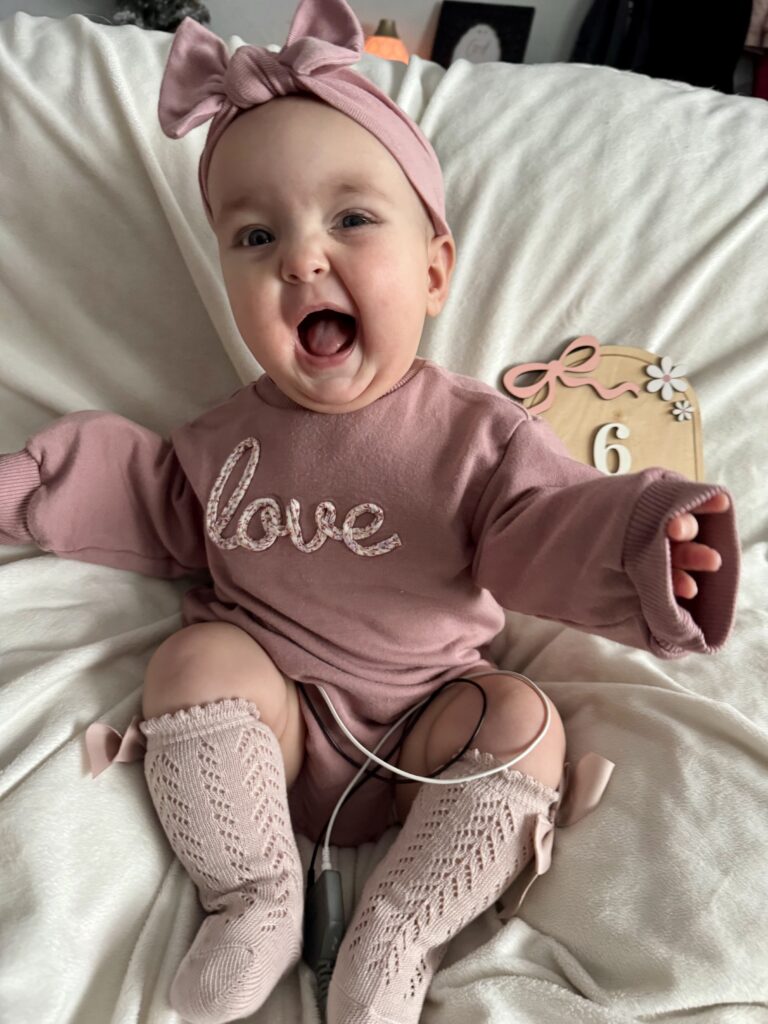
Real families, real results. Our patients and families inspire us every day. These stories offer hope, guidance and reassurance that we are here for your child every step of the way.
Explore how Dayton Children’s newborn intensive care unit has gone above and beyond for kids just like yours.


for your visit
Learning that your baby needs NICU care can be scary and overwhelming. We are here to provide the highest level of care in a comforting, healing environment, and to help you through this time.
Whether at Dayton Children’s main campus or at Kettering Health Main Campus, you can feel confident your baby is in the best hands. If you have any questions, feel free to ask your care team members at any time.
for parents and guardians of our NICU patients
You may be wondering what to expect when your baby arrives in the NICU. Here is an overview. Our care teams will be here to support you throughout the process. We also know this can be an overwhelming time – please ask us questions at any time. We are all here to support you and your baby. A charge nurse is available every shift. Please use your call light and ask to speak to them if you have questions or concerns.
- Your baby may arrive to one of our NICUs in a few ways – you may drive them, they may be transported by ambulance, or they may be accompanied by Dayton Children’s and Kettering Health[GD2] clinicians during your delivery.
- Once your baby arrives in the NICU, many team members will be caring for and examining your baby to make sure they’re comfortable and getting the appropriate care.
- NICU babies may need help breathing, often need X-rays and other tests, and may not be eating yet so will have an IV (nutrition through a tube in a vein).
- Your baby’s care team will create an initial care plan, and will talk with you about the plan. The care team will check on your baby often, and the care plan will change as your baby’s needs change. We will share with you any changes through regular updates, including during family-centered rounds.
- Family-centered rounds will happen every day, usually in the morning. This is when your care team gathers to talk about the plan for the day, share updates on your baby’s care, and hear about your questions or concerns. We encourage you to attend these events, but we know that it’s not always possible. We will get your cell phone number so we can call you to update you and answer any questions, too.
for visitors of the NICU
We never lose sight of the fact that these tiny babies are precious to their parents, grandparents and siblings. Our goal is to make families feel welcome in our unit and help them prepare for the day when their child is able to go home.
visiting hours
As a parent, you are the most important member of your baby’s team and can visit anytime. For the security of all babies, you must get a visitor badge before coming to the NICU.
- At Dayton Children’s main campus, you will stop at the welcome center. If you arrive at the main hospital between 8:00 pm – 5:00 am, you will need to enter through the emergency department.
- At Kettering Hospital Main Campus, you will stop at the NICU front desk.
No more than 4 parents, grandparents or visitors can be in your child’s room at one time. Visitors should not have any signs of illness, and must be up-to-date on vaccines and immunizations. We’ll also ask all visitors to do hand hygiene before coming back to the NICU rooms.
Visitors must be 14 years old and older, unless they are a sibling of the patient. Sibling minors between the ages of 3 years and 14 years of age will be asked to provide immunization records. Other family members and friends are welcome any time as well, but must be accompanied by a parent of the baby at the bedside.
We may implement visitor restrictions anytime there’s a community-wide contagious disease outbreak such as flu, RSV, whooping cough, etc. This will be communicated on our visitor guidelines page.
family lounge
We understand the importance of remaining close to your baby. Our family lounge provides a quiet place to enjoy a moment of rest and relaxation during your baby’s stay. The family lounge is open to families and visitors of NICU babies.
find more resources for your visit
Get checklists, resources, and helpful tips for before, during, and after your visit to Dayton Children’s—so you know exactly what to expect.
resources – newborn intensive care
NICU family guide
This guide includes information about our NICUs, caring for your baby while they are in the NICU and getting ready to care for your baby at home. You will get a printed copy of this book when your baby arrives in the NICU.
patient resources at Dayton Children’s main campus
- Amenities and accommodations
- Support services
- The Ronald McDonald Family Room: The Family Room offers parents, guardians, grandparents and siblings a quiet place to have a break, take a nap in a nap pod, take a shower or do laundry, all at no cost. The Family Room also has coffee, snacks and lite meal options.
- The Ronald McDonald House:. Available to our patients’ families, the Ronald McDonald House can be a home away from home when a child is facing hospitalization. Located just across the street from Dayton Children’s main campus, it has bedrooms with private baths, a large kitchen with hot meals provided, multiple family rooms, as well as a play area, laundry facilities, a patio and free parking.
community resources
- CaringBridge.org: Create an account to share health updates, photos and videos with people who care about you. You can customize your settings to make your updates private or public. The website is also designed to rally your family and friends together when you need support.
choosing a pediatrician
We need to know which doctor you have chosen to care for your baby after going home. Some insurance companies require that you identify the pediatrician within the first 30 days of life. If you need help in selecting a pediatrician, visit our provider directory.
support for NICU families
Having a baby in the NICU can feel overwhelming, but you’re not alone. Dayton Children’s offers resources to guide and support you during your baby’s stay and beyond.