Carlos receives breakthrough treatment with CASGEVY™ at Dayton Children’s
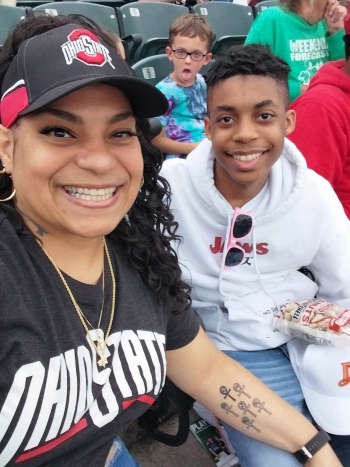
- patient name: Carlos
- patient age: 18
- condition: sickle cell disease
- seen in: hematology oncology
- providers: Dr. Mukund Dole
For Carlos, turning 18 is more than a milestone birthday; it’s also the start of an adulthood free from the constant pain he has faced for most of his life.
Carlos spent his first 18 years with sickle cell disease, a lifelong genetic disorder that affects the red blood cells. Typically, red blood cells are oval-shaped, but in individuals with sickle cell disease, they become “sickled” in shape, like a crescent moon. This can cause the cells to become stuck in small blood vessels. Individuals with sickle cell can experience shooting or stabbing pain and anemia. They are also at increased risk for strokes, organ damage, infections, and other serious health problems.
In March of 2025, Carlos achieved something extraordinary: he was among the first in the nation to be treated with CASGEVY™, a groundbreaking gene therapy offered locally through a collaboration between Dayton Children’s Hospital and Nationwide Children’s Hospital.
from first crises to lifelong care
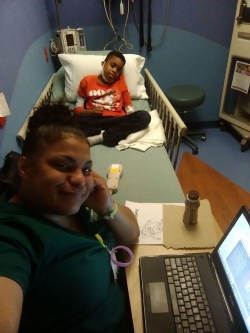
Sickle cell is a genetic disorder, passed from parent to child. Since both of Carlos’s parents carried the sickle cell trait, there was a possibility that he could have the disease. Carlos first showed signs of a sickle cell crisis at just 10 months old which his grandmother Crystal remembers vividly
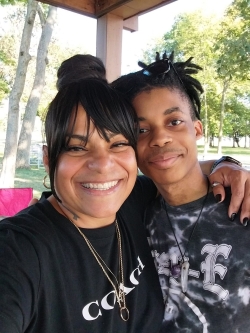
“He was our first child, our first grandchild—first everything,” shared Crystal. “We didn’t know much about sickle cell, but it was overwhelming to have this tiny, precious baby experiencing so much pain. It made us feel hopeless.”
Carlos was officially diagnosed around his first birthday and began receiving care from Mukund Dole, MD at Dayton Children’s.
“They have been taking care of me since I was little,” says Carlos. “I remember walking through the hallways, playing with nurses, and just feeling the warmth of everyone around me.”
Families living with sickle cell often spend years managing unpredictable crises and coordinating complex care. Crystal recalls the fear and uncertainty of Carlos’ early years, knowing that for many children with this disease, a pain-free adulthood is likely only a dream.
“Even when he was in pain, he always smiled and never let it defeat him,” says Crystal. “But I noticed he was becoming withdrawn because he didn’t want to burden anyone. I told him we had to face it together and that he needed to speak up about his pain.”
From the very beginning, Dayton Children’s went beyond medical care to support the entire family. “They helped with so many things,” says Crystal. “Food, gas, mental health services, respite care—they connected us with resources we didn’t even know were available.”
discovering life saving therapy at Nationwide Children’s Hospital
Possibly the best resource of all was the cellular therapy program. This one program, two campus approach allows Dayton-area families to stay close to home at Dayton Children’s for most of their care, while receiving expert transplant care from Nationwide Children’s, one of the top ten children’s hospitals in the country for cancer care. Nurse coordinators and hematology/oncology providers on both teams work with and support families through the whole process to help them navigate the journey.
Through this program, Carlos’s family was introduced to CASGEVY™, a CRISPR-based gene therapy that reactivates the body’s ability to produce fetal hemoglobin. This allows red blood cells to flow freely, preventing the painful blockages that define sickle cell disease. By editing a patient’s own stem cells, these treatments can potentially provide freedom from sickle cell pain.
Having this cutting-edge treatment available close to home meant Carlos could stay in school, remain near his family, and keep the support network that had guided him for years. It also gave his grandmother, who is also a nurse the support she needed to work and balance caregiving responsibilities.
partnering for Carlos’s gene therapy treatment
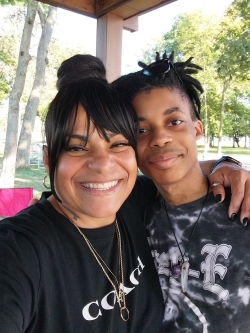
The CASGEVY treatment process took over a year, mostly at Nationwide Children’s. First, Carlos provided his blood for modification, then had apheresis lines (a type of IV) placed, and underwent two inpatient admissions for stem cell collection. His final hospital stay lasted two months, during which he remained in a sterile environment due to chemotherapy and a temporarily weakened immune system. On infusion day, the CASGEVY therapy was administered in less than an hour—but the impact would last a lifetime.
“The treatment itself felt weird and hot. But it was life-changing. Turning 18 and actually getting to experience adulthood; that’s the biggest gift of all. Now I feel like the best version of myself. This is my peak!” Carlos shared, just two days after his birthday.
from pain to possibility
Carlos has fully recovered and is now free from sickle cell pain crisis. For Crystal, the transformation is remarkable.
“Sickle cell doesn’t just impact one person. It wasn’t just Carlos who got healed—it’s our whole family,” Crystal said. “It may seem small, but when you spend every day planning around his illness, this makes a world of difference. I told him, ‘This is like a rebirth, a new chapter. You get to go into adulthood not tethered to doctor’s appointments, pills, or pain.’”
Carlos is taking his new lease on life seriously, focusing on his talents and passion and diving headfirst into pursuing his dreams. A talented writer, Carlos has finished his first book which he hopes to have illustrated and one day animated to make his dream fully complete.
His advice to others: “Pursue your dreams—even if you have sickle cell. It won’t fully stop you from what you want to do. The indomitable human spirit can overcome,” he says.
related posts

offering hope to other families
Sickle cell disease affects approximately 10,000 people in the United States, most of whom are of African descent, and millions more worldwide. Many families spend years navigating painful crises, hospitalizations, and limited treatment options. Until recently, treatments like the one Carlos received were unavailable outside of clinical trials.
While breakthroughs like CASGEVY offer hope, many children with sickle cell disease still face limited treatment options. More awareness, research, and equitable access are crucial to ensure that more families can experience the same life-changing outcomes as Carlos.
For families currently struggling, “I know it feels dark and hopeless, but you are not going through it alone. Use your resources, talk to someone, and don’t be afraid to ask for help,” Crystal encourages. “I see this as a miracle – This treatment is giving my grandson a real fighting chance at life. I hope other families affected by sickle cell can experience this same opportunity.”