Also called: Broken Clavicle, Fractured Clavicle, Fractured Collarbone
Overview
What Is a Broken Collarbone?
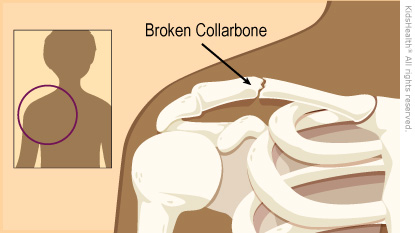
The collarbone (also called the clavicle) is the bone that connects the breastbone to the shoulder. The collarbone runs horizontally between the top of the breastbone (sternum) and shoulder blade (scapula). You can feel the collarbone by touching the area between the neck and the shoulder. A broken collarbone is when this bone breaks.
Top Things to Know
- A broken collarbone is a break in the bone that runs between the chest and shoulder.
- Pain, swelling, bruising, trouble moving the arm, or skin sticking up over the bone can happen.
- Most breaks heal with ice, pain medicine, arm support like a sling, and exercise (as the doctor recommends).
- Protective gear, supportive shoes, a healthy diet, and exercise may help prevent breaks.
Signs & Symptoms
What Are the Signs & Symptoms of a Broken Collarbone?
Someone who breaks a collarbone might have:
- pain over the collarbone
- trouble moving or lifting the arm or shoulder on that side
- swelling, tenderness, and bruising along the collarbone
- skin sticking up or “tenting” above the break
Causes & Prevention
How Do Broken Collarbones Happen?
Kids can get a collarbone fracture by falling hard on a shoulder or an outstretched arm, or if their shoulder hits against something or someone (for example, while playing contact sports like football, wrestling, rugby, lacrosse, and hockey).
Can Broken Collarbones Be Prevented?
Because collarbone fractures happen suddenly and unexpectedly, it can be hard to prevent them. But to decrease the risk, encourage your child to:
- Wear all the recommended protective gear and learn the proper techniques for the sport — when playing contact sports.
- Keep bones strong by eating a well-balanced diet. Serve lots of vegetables and foods that are rich in calcium and vitamin D to help build strong bones.
- Do strength training and stretching to build strong, flexible muscles. Muscles that are strong and flexible will help support bones better and keep kids agile and less likely to experience a hard fall. A proper warm-up, including dynamic stretching exercises, can help muscles perform at their best during play.
- Wear well-fitting, supportive footwear that’s right for the sport.
Diagnosis
How Is a Broken Collarbone Diagnosed?
To diagnose a collarbone fracture, healthcare providers ask about how the injury happened, do an exam, and order X-rays.
Treatment & Care
How Is a Broken Collarbone Treated?
Most broken collarbones heal with a sling and some rest. Sometimes kids might use a shoulder immobilizer instead of a sling. A shoulder immobilizer is like a sling, but also has a strap that goes around the waist. Ice and pain medicine help with pain and swelling during recovery. As your child starts feeling better, your healthcare provider may recommend some exercises or physical therapy to help improve strength.
Call your healthcare provider if your child has pain or swelling that gets worse.
Other Common Questions
How Long Does It Take for a Broken Collarbone to Heal?
Most broken collarbones heal quickly and completely. Within a few months, kids usually can do everything they did before the injury.
Will the Collarbone Heal Straight?
Even if the broken bones aren’t perfectly lined up, the body usually can make them straight again. That’s because the collarbone has a thick periosteum (outer liner on the bone). The collarbone periosteum doesn’t usually break, so it acts like a sleeve to hold the bone together while it heals. Rarely, the doctor might recommend surgery if the broken bones are very out of line.
Sometimes, there’s a bump where the bone broke. In kids who are still growing, the bump tends to get smaller and go away within a year. Sometimes the bump doesn’t fully go away. But it doesn’t hurt or cause other problems with the arm or shoulder.
When Can My Child Go Back to Sports?
Your healthcare provider will see your child again and let you know when it’s OK to go back to sports. This is usually when:
- There’s no pain when the healthcare provider presses on the collarbone.
- Shoulder strength is normal.
- Your child can move and use the arm and shoulder without pain.
In general, kids can go back to noncontact sports (such as running or swimming) in about six weeks and contact sports (such as football, lacrosse, and hockey) in 8–12 weeks.