This year we continued to deliver on that promise by expanding specialty services, improving patient satisfaction to record levels and strengthening an already strong track record in patient safety and quality. As we often say, kids are not little adults. They deserve care just right for them. Here are some of the ways we delivered on our promise this year:
We continued our work with the other Ohio children's hospitals to share best practices and lessons learned so together we can provide the safest care possible to every child. The Ohio Children's Hospitals' Solutions for Patient Safety (OCHSPS) is so innovative the Centers for Medicare and Medicaid Services (CMS) awarded $4.3 million to expand this learning network to 25 additional children's hospitals nationwide. For our part, 100 percent of Dayton Children's employees have completed safety training and leaders throughout the hospital have received additional training. We have also implemented some best practices for developing a high-reliability culture. Our collective goal is to reduce serious safety events by 95 percent by 2015.
This year Dayton Children's recorded a 91.2 percent parent and family satisfaction rating, setting an all-time record! Even better, more than 93 percent of parents shared that they were so pleased with Dayton Children's that they would recommend us to others. We also earned record high levels of satisfaction from families cared for in the Soin Pediatric Trauma and Emergency Center, outpatient surgery, our inpatient care areas and with our outpatient specialty care services. Our focus on service excellence and quality of care is having a positive impact for families.
Dayton Children's joined with other children's hospitals in Ohio in a $2 million research collaborative to focus on two areas: prevention and treatment for asthma and neonatal abstinence syndrome (babies born addicted to drugs). By bringing together the experience of Ohio's six children's hospitals, the objective is to identify and implement the best treatments for infants and children that will improve outcomes and lower health care costs.
We made a significant commitment to bring the best pediatric specialists here to Dayton Children's and to increase access to high-demand pediatric specialists. Our efforts paid off this year as we recruited five outstanding pediatric specialists in four key specialties. We also expanded services in Springfield with the opening of our specialty care center there. Now children and their families from the Springfield area have access to pediatric experts in their own community.
This year we renovated the patient registration area to make it more kid friendly, while providing more privacy for parents to complete the registration process. We also opened the new, 1,300-square-feet MeadWestvaco Family Resource Center, which offers quiet and inviting surroundings for parents, families and community members seeking trusted child health, safety and parenting information. We also introduced Dr. Mom (Melissa King, DO, pediatrician, Children's Health Clinic), who blogs about kids' health issues, providing her helpful perspective as both a mom and a pediatrician.
Dayton Children's is privileged to have the trust of a generous community that believes in our mission. Various events this year, including a record-breaking Children's Miracle Network broadcast, provided vital support for our Regional Level IIIB Newborn Intensive Care Unit (NICU), our cancer care program, and other key specialty services. Community leaders also joined together with Dayton Children's to launch the $2 million campaign to build a new CARE House, the Montgomery County child advocacy center. Together we are well on our way to breaking ground on an up-to-date, larger facility to better serve child abuse victims and their families.
As you pull into Chris and Kristy Stager's driveway in Troy, Ohio, you may notice their license plate reads KP4BB. To many, this may not mean anything.
But to the Stager's friends and family, it stands as a constant reminder of their journey, a reminder to "Keep Praying for Baby Bailey."
The journey began in the early morning hours of October 26, 2011, when Chris heard noises from his 15-month-old daughter Bailey who was burning with
fever. Chris took his daughter to his wife Kristy who grabbed a thermometer. Bailey's temperature was 106.9. They knew they needed to get their daughter
to the closest hospital as soon as possible. There at Upper Valley Medical Center the ER team worked to lower Bailey's temperature, but when she became
unresponsive they knew she needed more specialized care—care found only at Dayton Children's.

- Parents Chris and Kristy Stager
After arriving at Dayton Children's by the hospital's pediatric mobile intensive care unit, the doctors went to work. What caused the fever? Why was Bailey unresponsive? After several tests and days in the pediatric intensive care unit, specialists at Dayton Children's determined Bailey had a very rare virus and that virus led to another condition, acute necrotizing encephalopathy of childhood (ANEC), an acquired brain abnormality. Her chances of surviving either the virus or the ANEC were very low.
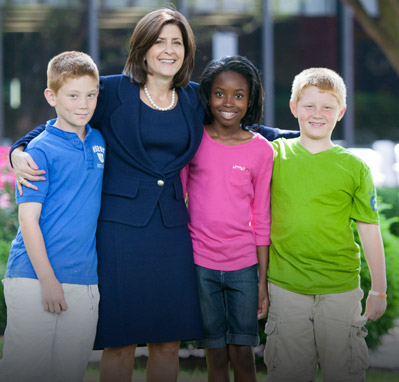
Deborah A. Feldman became the fourth chief executive of The Children's Medical Center of Dayton on July 2, 2012, succeeding David Kinsaul, who retired in June after leading the hospital for nine years. Debbie joined the organization after having served as Montgomery County's lead executive for the past 15 years. Since beginning in her new role, she has been reaching out to key stakeholders internally and externally to gain their input on how we can best continue to serve the region's children and their families. Under her direction, the organization has launched a "future state" initiative to provide a more detailed picture of what Dayton Children's will look like and be in the year 2020.
Before joining Dayton Children's in July, I was well aware of the hospital's outstanding reputation and so I am honored to serve as the president and
CEO of such an amazing organization. As I meet with everyone from the physicians to the nurses to the housekeepers, the passion they feel about what they
do—knowing they are making a difference in the lives of so many children—is clear. I am also impressed with the organization's quality and
safety outcomes, as well as the business discipline to enable us to meet our mission well into the future.
For more than 45 years, Dayton Children's has provided high quality, specialty care to our region's children and has become one of our region's greatest
assets. So looking to our future, it's important we harness that passion and remain singularly focused on finding the best way to meet our mission to
improve the health status of all children in our region.
Improved access to the best pediatric subspecialists will remain paramount to our future. Last year, our Board of Trustees made a significant investment
to recruit and hire those specialists needed most so we can reduce the wait time for children to see a specialist. We have made great strides, but we must stay focused on ensuring we have the right number of pediatric specialists in place so children are seen within 10 calendar days of being referred by
their doctors.
We also continue to add outpatient specialty services throughout the region so children and their families can receive the care they need closer to their
home. By seeing children in pediatric specialty care centers closer to home, we further ease access to important specialty care. As this region's only
pediatric hospital, we need to continually look for ways to provide the right care where our families need it.
Our future state certainly will include continued development of our centers of excellence in cancer care, emergency and trauma care, newborn and
pediatric intensive care and surgery. We will continue our collaboration with the other children's hospitals in Ohio to make Ohio the best and safest place for children to get care.
Dayton Children's is an amazing organization, with great community support and as a result, we have a very bright future. Our mission will guide us as we
make investments in people, technology and facilities to ensure the highest quality, expert care is available where and when parents and children need it
most.
The right care, right now, right here.
UNDER DEBBIE'S DIRECTION Dayton Children's has launched a "future state" initiative to provide a more detailed look ahead to the year 2020.
With improved access to pediatric specialty services, we were able to provide expert care to more children in our 20-county region. In
fact, more than 290,000 children visited Dayton Children's during the year, making it one of our busiest years on record.
Take a closer look at the patient care statistics, our financial results and information on staff and voluteers. All information that follows is based on fiscal
year ending June 30, 2012, unless otherwise noted.
With patient visits up over last year and through strong expense management, Dayton Children's ended the year with an operating margin of $16.2 million or
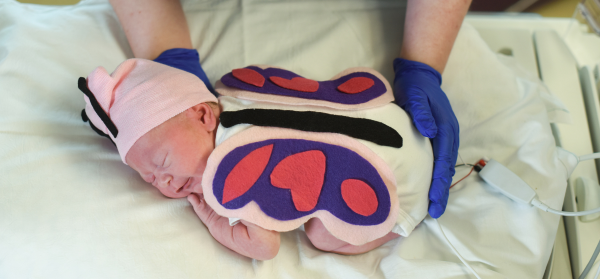
7.9 percent of revenues. While total census was down versus last year, we saw a five percent increase in critically-ill newborns cared for in our Regional
Level IIIB Newborn Intensive Care Unit. This growth is due to strong relationships our experts have built with physicians and staff at birthing hospitals in
the region, our reputation for quality care of premature and critically-ill newborns, and a slight increase in the birth rate in the latter half of our fiscal
year.
Outpatient volume was also up slightly due to increases in all diagnostic services and more patients who received care in Almost Home, our observation unit
designed to provide short-term care without a hospital admission. Dayton Children's also experienced growth in visits to its testing centers, which bring
Dayton Children's pediatric expertise in lab, imaging and cardiology testing to a community setting. Dayton Children's currently has six centers, with the
most recent of which opened in September. Outpatient specialty visits also were up versus the year prior. With the focus on increasing specialty clinic time
and locations, and with the addition of more pediatric subspecialists, we've been able to improve access to specialized care.
The hospital also continued its efforts to do more with less benefiting from programs that were implemented last year—changes to employee benefits,
smarter purchasing and managed hiring. Even with the increased volume, we controlled our expenses to less than the rate of the volume increase. This was
particularly evident in our management of salaries to 42.3 percent of net patient revenues, which was below our budgeted amount. Despite a shift in payer mix
to more Medicaid and cuts in the state budget, we ended the year in a strong financial position.
TAMMY WITWER, RN, in the pediatric intensive care unit, has worked at Dayton Children's for 26 years, caring for critically-ill patients.
The 30th anniversary of the Children's Miracle Network Hospitals (CMNH) telethon was celebrated June 2-3, 2012. It is the culmination of a year-long fundraising effort by national and local CMNH partners and other third-party special events. Once again, we were honored to have Cheryl McHenry and Mike Hartsock of WHIO-TV and Nancy Wilson of K99.1FM serve as the hosts for the two-day event broadcasted live from the Dayton Children's auditorium.

On January 31, 2012, the new MeadWestvaco Family Resource Center was dedicated. The $150,000 gift from the MeadWestvaco Foundation made it possible to build a new family resource center that significantly increases our capacity to fulfill more than 10,000 requests every year. The new bright and spacious 1,300-foot space near the hospital's main lobby offers families needing information and support the privacy and comfort they need. Members of our community—including school nurses, child advocates and safety experts—frequently turn to the center staff for the latest child health, safety and psychosocial information and resources. Ongoing support from The Little Exchange of Oakwood, a gift from Ronald McDonald House Charities and donations from individuals and organizations ensure this important resource is available to anyone needing it for years to come.
Mary Alice Slorp, licensed practical nurse, TWIG member and Little Exchange volunteer, and her husband Gerald left a generous bequest to Dayton Children's that benefits the Medical Research Endowment Fund. Managed by the hospital's Foundation Board, the Medical Research Endowment was established in 1987 with support from the Women's Board and several subsequent gifts from The Kettering Fund. Income from this endowment is available annually to support research proposals submitted by physicians and nurses at Dayton Children's. Inhouse research support provides leverage for local matching funds and a track record of funding that is needed for larger grants from the National Institutes of Health and other organizations. These research funds allow us to bring new drugs to patients through clinical trials and are important in recruiting top pediatric subspecialists, residents and nurses.
This year launched a two-year fundraising effort to raise $2 million to construct a new building for CARE House, Montgomery County's child advocacy center. Established in 1999, CARE House serves child abuse victims through a centralized, child-focused approach that brings together law enforcement, child protection services, prosecution, mental health experts, medical professionals and victim advocates to help reduce the trauma victims experience after abuse has been reported. CARE House is currently located in a more than 100-year-old Victorian-period home across the street from Dayton Children's and serves more than 600 children a year, often the worst of the nearly 5,000 cases of abuse reported in Montgomery County each year. CARE House involves a partnership between Dayton Children's, Montgomery County Prosecutor's Office, Dayton Police Department, Montgomery County Sheriff's Office and Montgomery County Job and Family Services.
The current CARE House facility is no longer able to efficiently accommodate the growing number of children and families requiring advocacy services. The new advocacy center, which will be built on Dayton Children's campus, will double its current size. The new facility is expected to include:

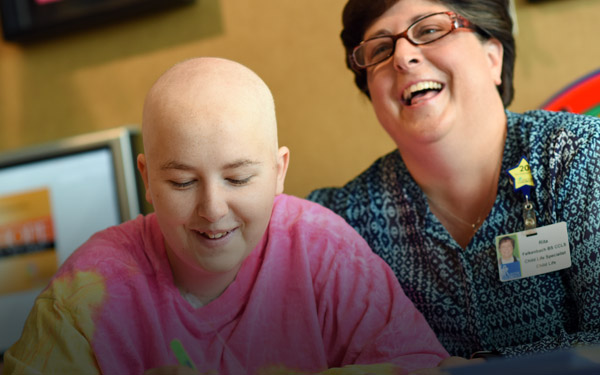
When the 355 members of the TWIG (Terrific Women In Giving) Auxiliary combine forces, the results are impressive. Through the annual Sugarplum Festival of Trees, Gem City Jam & Hoopla Golf Outing, Mom's Marts, champagne luncheons, and various sales and special projects, TWIGs donated a record $271,500 toward the Pediatric Cancer and Blood Disorders Endowment at Dayton Children's. This endowment was created to enhance an already family-focused cancer care program that will connect patients with multiple resources dealing with care, treatment, education, support groups and other resources. Annual interest will eventually fund a social work position and a child life specialist assigned specifically to help kids with cancer. "If you can help a family with a child in a health crisis by easing their pain, what a wonderful reward," says TWIG past president Cindy Guthrie. TWIGs will complete a three-year $500,000 pledge for this endowment in 2013.
Dayton Children's was built on the hopes and dreams of some very dedicated community leaders who wanted a children's hospital in this region so children did not have to travel far for specialized health care. With this founding spirit, Dayton Children's continues to deliver on its mission to improve the health status of all children regardless of the ability to pay. Not only do we provide care at the hospital and in our specialty care and outpatient testing centers, but we also reach out into the community with programs and services to help improve the health and safety of our region's children.
During the fiscal year ending June 30, 2011, Dayton Children's provided more than $26 million in programs and services that benefited our
community. These community benefits are above and beyond the compensated care provided on our main campus and in our community locations and
illustrate our sincere dedication to the pediatric population in our 20-county service area.
At Dayton Children's, we are committed to living our mission to improve the health status of all children. Our community benefit activities
demonstrate this commitment to our community's children. This report outlines our unique value to the Dayton community as a regional asset and
resource for children's health and well-being. The financial data included in this report reflects community benefit programming and activities for
fiscal year 2010-2011.
We live our mission to serve all children, regardless of their ability to pay.
As a not-for-profit hospital, we know that status comes with a price; the price is that we must always do what is in the best interest of the patients and the
community.
Medicaid is the nation's largest public provider of health insurance to low-income families and children. Nationally, children's hospitals provide 44 percent
of care to children on Medicaid. At Dayton Children's, we serve a disproportionate share of children from low-income families compared to our adult
counterparts.
Children insured by Medicaid typically require extra care than other patients due to various socioeconomic factors. However, Medicaid only
reimburses Dayton Children's roughly 68 cents on the dollar of costs. Dayton Children's is responsible to make up the difference.
We report the unpaid costs of Medicaid programs and the total benefits for the poor, reflecting the shortfall from government payment methods versus our
actual costs to provide the care.
Dayton Children's commitment to caring for children beyond our walls and in the community is a key part of our mission. Our community health improvement services
allow us to prevent injuries, improve health literacy and engage the community on important health initiatives.
Through our Regional Pediatric Health Assessment, conducted every three years, and injury and health data collected from our trauma and emergency center, admission
trends and community partners, we provide robust programming to address critical pediatric health care needs in our community. We hope these efforts will keep kids safe and healthy.
Community health improvement services incorporate health and safety outreach programs, including Safe Kids Greater Dayton, Stay Ahead of Game helmet giveaways, helmet fittings, car seat checks, health fairs and speaking engagements. Through these programs we are able to take our pediatric expertise into the community to improve the lives of children and families. This category also includes the costs for our MeadWestvaco Family Resource Center, offering information and support for families, asthma and smoking cessation programs, healthy lifestyles projects and special needs programming that work to enhance the quality of life for children and families in our region.
Net community benefit expense
Percent of total benefit
As a teaching hospital, Dayton Children's hosts 60 medical residents from the Wright State University Boonshoft School of Medicine each year. By providing a
high-quality pediatric learning environment, Dayton Children's provides the community and our medical students valuable skills that can only be developed at a
children's hospital.
In addition, Dayton Children's houses this country's only civilian/military integrated pediatric residency program with Wright-Patterson Air Force Base. This unique
partnership affords military residents experience with a wide variety of
patients from different ethnic, socioeconomic and geographic settings.
Training resident physicians involves significant costs far beyond those usually associated with patient care. However, kids need specialized care and we are proud to
support and train the next generation of pediatricians and pediatric specialists.
Net community benefit expense
Percent of total benefit
Dayton Children's provides many specialty services despite financial loss because they meet an identified community health need. These clinical programs include
pulmonary, endocrinology, hematology/oncology, gastroenterology, psychology, nephrology, urology, surgery, child abuse, neurology, developmental pediatrics, and the
Children's Health Clinic, our primary pediatric care clinic.
By providing a full complement of pediatric subspecialties, children in our region have access to the comprehensive care they need without having to travel to a larger
facility or community.
Net community benefit expense
Percent of total benefit
Dayton Children's contributes to charity events and nonprofit organizations that share our mission and improve the quality of life for children and families in our
community. Organizations assisted by Dayton Children's include the Cystic Fibrosis Foundation, Leukemia and Lymphoma Society, the Juvenile Diabetes Research
Foundation, AIDS Resource Center of Ohio, Prevent Blindness Ohio and many more. We are pleased to partner with these organizations on key pediatric health issues.
Net community benefit expense
Percent of total benefit
As a teaching hospital, Dayton Children's works closely with the Department of Pediatrics at the Wright State University Boonshoft School of
Medicine, not only to train future doctors, but also to advance pediatric care through research and written scholarship, including journal articles, abstract publications
and presentations, and textbook chapters.
Included with the Dayton Children's Annual Report is this report on research and other academic activities jointly presented by Dayton Children's and the department of
pediatrics at the Wright State University Boonshoft School of Medicine. Also included in this report are research activities by other members of the Dayton Children's staff
and Dayton Children's Clinical Trials.
Wright State faculty and members of the Dayton Children's professional staff continue to publish papers in excellent peer-reviewed journals and continue to be very well represented, presenting papers and posters at major national meetings. Dayton Children's pediatric residents and Wright State medical students participate in many of the research programs.
The Southwestern Ohio Ambulatory Research Network (SOAR-Net), a Boonshoft School of Medicine and Dayton Children's practice-based research network, continues to receive national attention for its expanding community-based research programs. SOAR-Net aims to make important contributions that enable primary care clinicians to provide high quality, culturally competent care to their young patients.
Seventeen faculty members secured nearly $2 million in grants and contracts for research and pediatric programs.
More than 12 percent of the Wright State University Boonshoft School of Medicine class of 2012 selected pediatrics and internal medicine-pediatrics as a career.
Dayton Children's successfully implemented its work-hour plan for adhering to the standards of the Accreditation Council for Graduate Medical Education.
Included with the Dayton Children's annual report is this report on research and other academic activities jointly presented by Dayton Children's and the department of pediatrics at Wright State. Also included in this report are research activities by other members of the Dayton Children's staff and Dayton Children's Clinical Trials.
Copyright © 2012
The Children's Medical Center of Dayton
One Children's Plaza
Dayton, Ohio 45404-1815
937-641-3000